

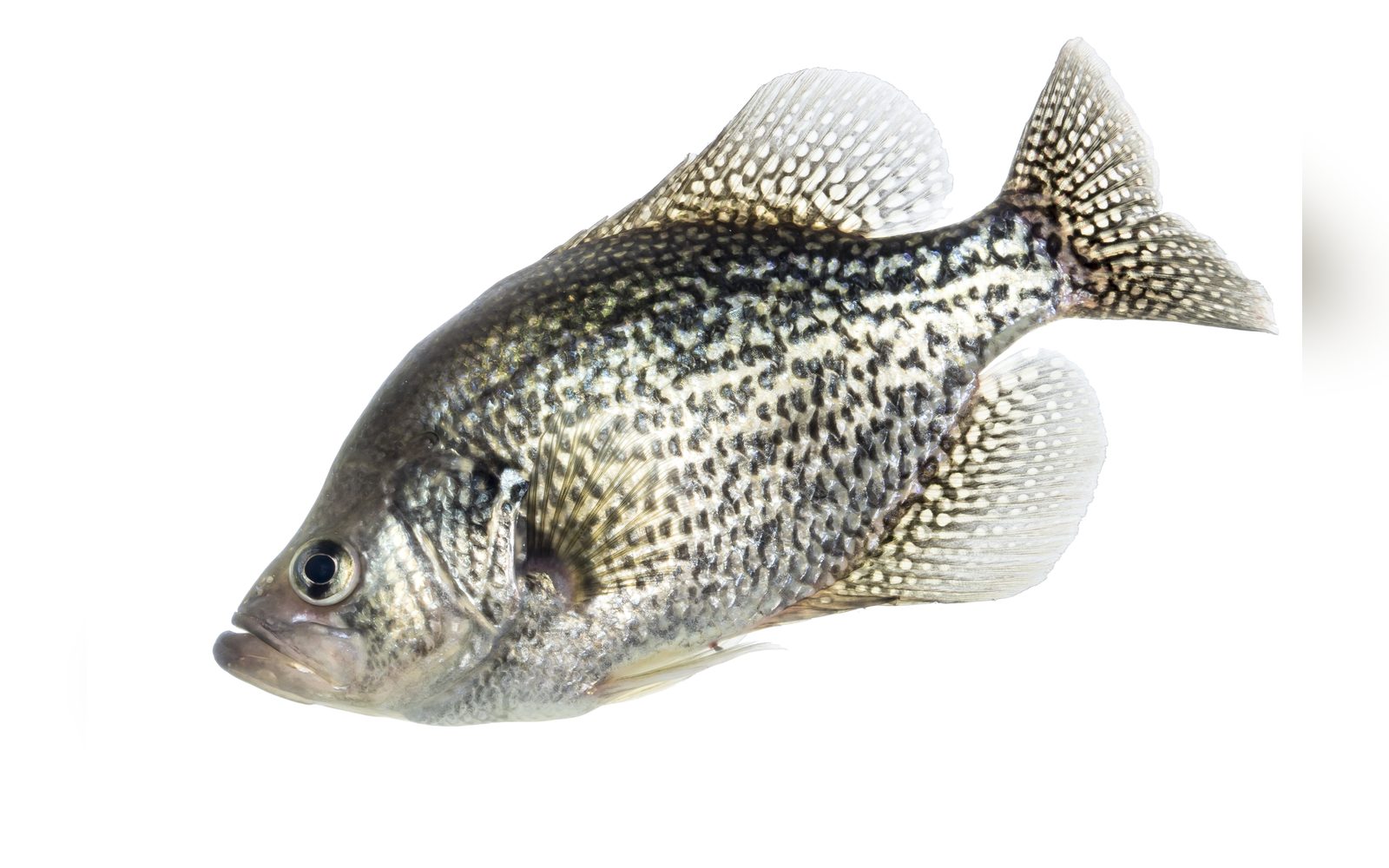
New York DEC says crappie have large eyes and feed in low light and after dark. For artificial options, see crappie jigs.
Crappie baits, in order
-
Small minnows. The first choice in Iowa (“the best live bait”), Virginia (small to medium minnows) and Wisconsin, where small fathead minnows, sometimes called “crappie minnows,” are the most popular crappie bait. Iowa wants a minnow 1 to 1 1/2 in long, hooked through the back just below the dorsal fin without piercing the spine, on a size 4, 6 or 8 hook with a light split shot about a foot above it. Virginia lip-hooks a 1 1/2 to 2 1/2 in minnow and drifts it under floats set to cover levels from 6 to 10 ft or deeper, using a bobber stop on the line. Florida uses a light-wire #4 hook with a small split shot below a float.
-
Minnow on a jig head. Oklahoma calls a live minnow on a 1/8 or 1/4 oz jig head great for dock fishing. Wisconsin pairs small fathead minnows with a light jig, and Florida says tipping a jig with a live minnow makes it even more effective.
-
Freshwater grass shrimp. Florida FWC says successful anglers often drift through deeper water with small minnows or freshwater grass shrimp until they find a school.
-
Small shiners and fathead minnows in deep brush. In hot summer Missouri fishes deeper brush near the thermocline, where water suddenly gets cooler with depth, with split shot, a light-wire hook and a small shiner or fathead minnow lowered over the side of the boat.
-
Worms and insect larvae. Wisconsin lists worms and insect larvae among the foods crappie take, alongside spinners and spoons.
Pick a bait by situation
| Situation | Bait and rig | Source |
|---|---|---|
| Open or deeper water, searching for a school | Drift small minnows or grass shrimp until you find them | Florida FWC |
| Docks | Live minnow on a 1/8 to 1/4 oz jig head | Oklahoma DWC |
| Outer edges of weed beds | Small minnows, small marabou jigs, plastic minnows, small streamer flies | Wisconsin DNR |
| Near submerged trees or cover | Still-fish or slow-troll small minnows | Missouri MDC |
| Hot summer, deep brush | Small shiner or fathead minnow, split shot, light-wire hook | Missouri MDC |
| Season | Fish shallow in spring and fall, deep in summer and winter | Missouri MDC |
Timing
Oklahoma sees crappie move toward the shallows to pre-spawn at 45 to 55°F and spawn at 55 to 65°F, with March to May the peak window for bank anglers; spawn dates vary by state, from mid-March in southern Missouri to May and June in Wisconsin. Missouri finds crappie most active in the evening and at night, aggressive in October and November around docks in the upper 10 ft, and catchable year-round, even through the ice. Florida’s best times are early morning and evening, mostly in cooler months, with summer nights good. Present the bait above the fish, Oklahoma says, because crappie prefer to attack prey from below and behind.
Tackle
Iowa DNR uses 2 to 4 lb monofilament (not more than 6 lb) on an ultra-light rod; Virginia uses a 6 to 7 ft spinning outfit with 4 to 8 lb line. Washington says a gentle hook-set is necessary because crappie have a thin mouth.
Live bait and baitfish rules vary by state and water. Read your state agency’s current regulations first, for example the fishing pages of Iowa DNR, Missouri MDC, Virginia DWR or Wisconsin DNR.
For black vs white crappie and their seasons, see the crappie species guide. To hang a minnow at the right depth, use bobber fishing.
Sources
- Crappie, Iowa DNR
- Crappie tips for fishing, Missouri Department of Conservation
- Crappie, Florida Fish and Wildlife Conservation Commission
- Four great tactics for spring crappie success, Virginia Department of Wildlife Resources
- Crappie angler guide: top tips and area highlights, Oklahoma Department of Wildlife Conservation
- Black crappie, Wisconsin DNR
- Fishing for crappie, New York State DEC
- Hook your catch, Wisconsin DNR