

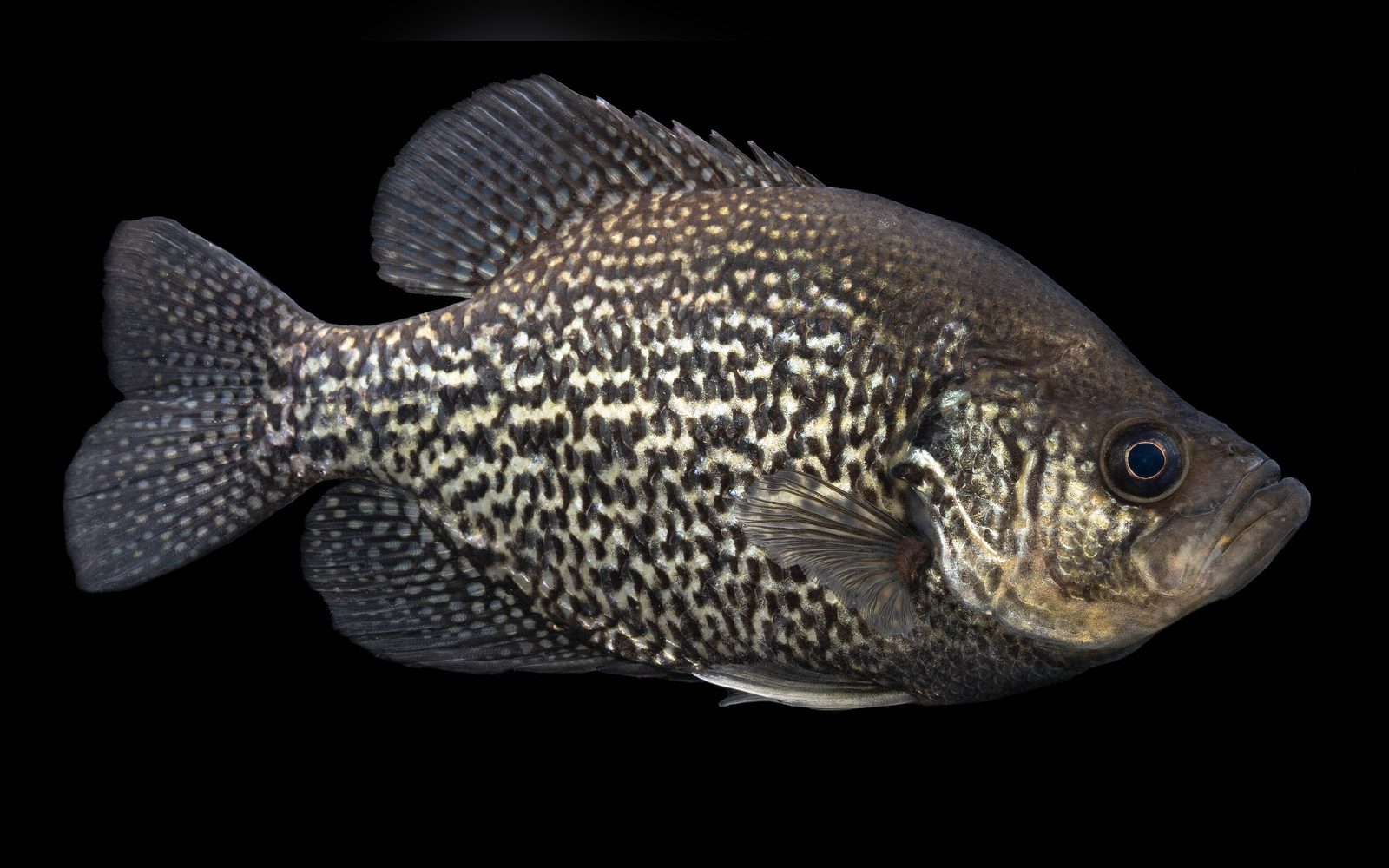
Virginia DWR puts it plainly: small crankbaits, spoons and spinnerbaits will catch active crappie, but no artificial will top the humble jig. Iowa adds that a lead-head jig imitates a small minnow when fished properly. For live bait to put on a jig, see bait for crappie.
Crappie jigs, in order
-
Tube jigs. Washington says small plastic tube jigs and curly-tailed grubs are the most popular and consistent producers. Missouri’s minimal kit is a handful of 1/32 to 1/4 oz jigs and two or three colors of tube bodies. Oklahoma names natural-colored tubes among its spawn-time choices.
-
Curly-tail and twister-tail grubs. Florida FWC calls 1/16 to 1/8 oz feathered or curly-tail jigs in white, yellow, pink and chartreuse popular. Virginia matches the tail to conditions: stubby bodies and short or stiff tails on cold days, fluttering twister-type tails when water is warm and fish are more aggressive, or when the water is cloudy.
-
Hair and marabou jigs. Oklahoma names hair jigs among its good options when the spawning cycle begins, and Wisconsin names small marabou-covered jigs among the best baits, cast along the outer edges of weed beds.
-
Weedless jigs for brush. When crappie are not active, Missouri says you may need to get the bait down into the brush by vertical jigging or casting, and a weedless jig works best for these presentations.
-
Jigs tipped with bait. Florida says tipping a jig with a live minnow makes it even more effective. Washington says to tip the lure with a bit of bait when the water is cool, below 55°F.
-
Bobber-suspended jigs. Iowa says crappie often move up from beneath to take a lure, so many anglers suspend a jig from a small bobber, always at least a foot off the bottom. Oklahoma bobber-jigs a baby shad, a small hair jig or a live minnow to stay in the strike zone longer, and keeps the lure in front of and above the crappie, since their eyes sit on top of the head and they attack prey from below and behind.
Other lures take crappie too. After the spawn and in summer, Oklahoma uses lipless crankbaits, diving crankbaits and jerkbaits for open-water schools or vegetated flats, and calls a small silver lipless crankbait with a black back an excellent cast-and-retrieve lure for rivers and reservoirs. Spawning crappie also take inline spinners (Oklahoma), and Wisconsin lists spinners, spoons, worms and insect larvae.
Jig weight by agency
| Agency | Weight | Note |
|---|---|---|
| Iowa DNR | 1/80 to 1/16 oz | Most popular lead-heads; hook sizes from 1/80 oz to no more than 1/16 oz |
| Florida FWC | 1/16 to 1/8 oz | Feathered or curly-tail jigs |
| Virginia DWR | 1/64 to 1/8 oz | 1/16 and 1/32 usually best |
| Missouri MDC | 1/32 to 1/16 oz | Flipped into shallow water along the shore at spawn; its minimal kit runs 1/32 to 1/4 oz |
| Oklahoma DWC | 1/8 to 1/4 oz jig head | For a live minnow on docks |
Colors, season and depth
| Situation | What to try | Source |
|---|---|---|
| Stained or dingy water | White, yellow and chartreuse; chartreuse is tried and true | Iowa DNR, Oklahoma DWC |
| Clear water | Dark colors such as blue or black | Iowa DNR |
| Other colors named | Chartreuse, white, black, yellow, smoke, pumpkinseed, hot pink | Virginia DWR |
| Spring and fall | Shallow; flip a small jig along the shore at spawn | Missouri MDC |
| Summer and winter | Deeper, in brush; slow, steady retrieve bumping cover | Missouri MDC |
| Post-spawn and summer, open water | Lipless and diving crankbaits, jerkbaits | Oklahoma DWC |
| Water below 55°F | Tip the jig with a bit of bait; retrieve slowly | Washington WDFW |
Fish it slowly. Washington says crappie will not normally strike a fast-moving target, and Missouri says they will not chase down a lure that goes screaming by.
Line, rod and hook-set
Iowa DNR uses lightweight monofilament of 2 to 4 lb test (not more than 6 lb) with an ultra-light spinning or casting rod. Virginia calls a light 6 to 7 ft spinning outfit with 4 to 8 lb line the perfect rig. Washington says a gentle hook-set is necessary because crappie have a very thin mouth, and Wisconsin prefers light, sensitive tackle so the light bite is easier to detect.
Crappie seasons, limits and any gear rules differ by state and water. Read your state agency’s current regulations first, for example the fishing pages of Iowa DNR, Missouri MDC, Virginia DWR or Florida FWC.
For black vs white crappie, spawning months and where they hold, see the crappie species guide.
Sources
- Crappie, Iowa DNR
- Crappie tips for fishing, Missouri Department of Conservation
- Crappie, Florida Fish and Wildlife Conservation Commission
- Four great tactics for spring crappie success, Virginia Department of Wildlife Resources
- Crappie angler guide: top tips and area highlights, Oklahoma Department of Wildlife Conservation
- Black crappie (Pomoxis nigromaculatus), Washington Department of Fish & Wildlife
- Black crappie, Wisconsin DNR