

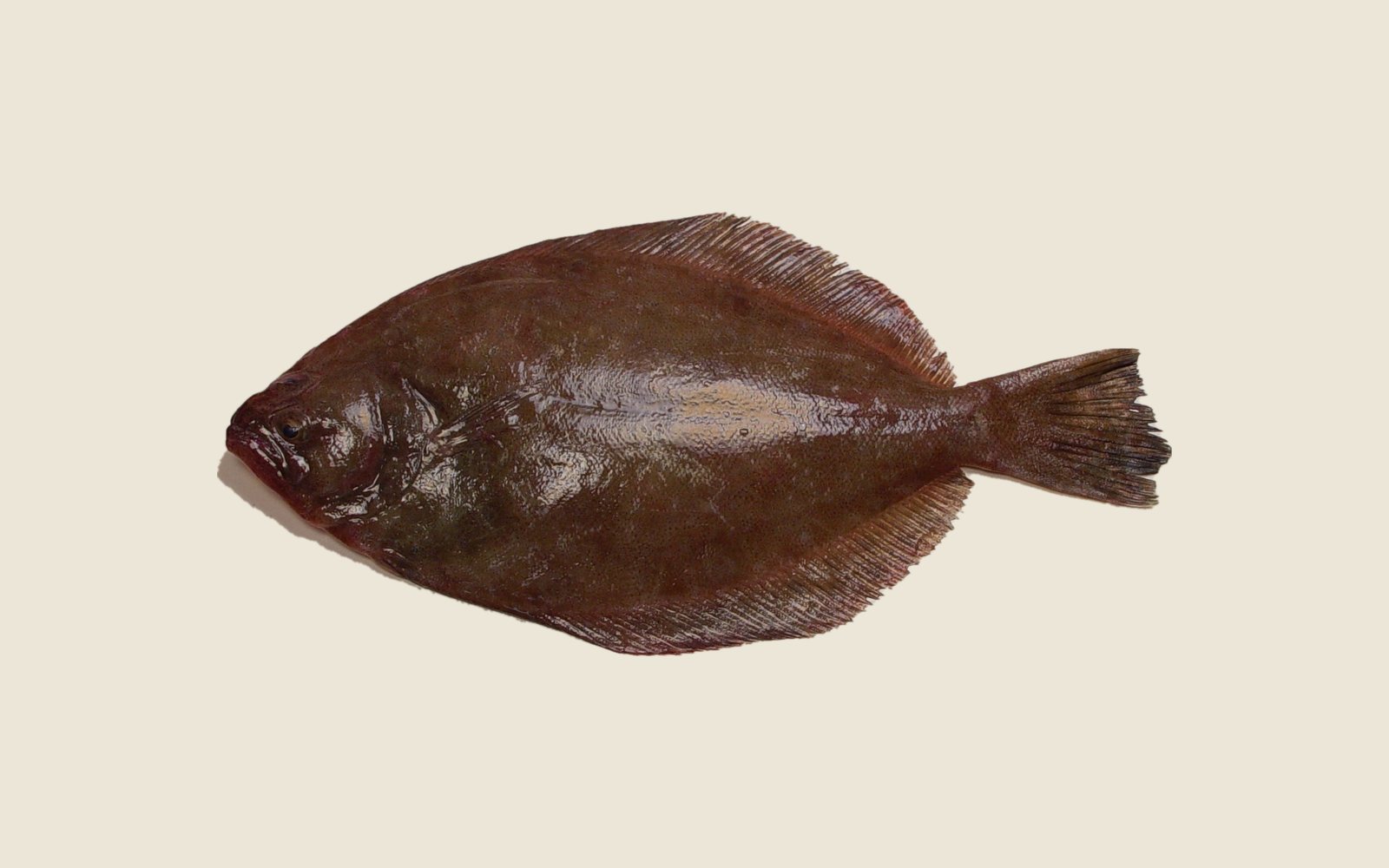
Flounder (southern and summer)
- Typical size
- Southern 15–18 in, summer 10–16 in (North Carolina)
- Best months
- NOAA (summer flounder): inshore late spring–summer · Texas (southern flounder): fall in channels and passes; spring on channel edges
- Top baits
- Live finger mullet, Live shrimp, Killifish (mud minnows), Minnows and squid strips, Worm jigs
- Rig
- Bottom or flounder rig; live bait worked slowly along the bottom
Seasons, size and bag limits and licenses vary by state and water. Check your state agency, for example North Carolina Marine Fisheries
Southern flounder vs summer flounder
This guide covers the two species the agencies profile, and the spot pattern tells them apart. Both are left-eyed (Texas for southern, NOAA for summer).
| Feature | Southern flounder | Summer flounder |
|---|---|---|
| Spots | Brown on the left side with many spots that are not ringed (North Carolina); diffuse spots without rings (South Carolina); may have 5 or more spots that are not eye-like (Florida) | Eye-like ocellated spots: three in a triangle near the tail (North Carolina); at least five dark spots in an X (NOAA); five in two triangles (South Carolina); 10 to 14 (Maryland) |
| Typical size | 15 to 18 in, to 33 in (North Carolina); most Texas angler catches are females of 1 to 1.5 lb | 10 to 16 in, to 32 in (North Carolina); averages 3 to 6 lb and 15 to 22 in (Maryland) |
| Where | Estuaries, rivers, tidal creek mouths and flooded marsh at high tide; overwinters offshore (South Carolina) | High-salinity coastal waters and estuaries in spring and summer, offshore in winter (North Carolina); lower and middle estuaries and coastal bays over sandy to slightly muddy bottom (South Carolina) |
| Spawning | Offshore in fall and winter (North Carolina, South Carolina); Texas fish leave the bays in fall for the Gulf | Peaks October to November (NOAA); September to December north of Chesapeake Bay and November to February south of it (Maryland); November to February offshore (South Carolina) |
| Records | Texas 13 lb (Sabine Lake, February 1976); South Carolina 17 lb 6 oz (1974) | South Carolina 3 lb 8 oz (1982); Maryland Bay record 15 lb |
Florida adds a third look-alike: the Gulf flounder has three spots. Maryland says the largest summer flounder reaches 4 feet and 30 pounds.
Where flounder hold
Flounder are ambush predators that camouflage by changing pigmentation (Texas). In Texas they gather at jetties and oyster reefs. In South Carolina southern flounder use estuaries, rivers and tidal creek mouths, moving into flooded marsh at high tide. They eat blue crab, shrimp and fish (North Carolina), mostly fish such as mullet, spot, mummichog and anchovy plus shrimp and blue crab (South Carolina).
When to catch flounder
The season is set by the move offshore to spawn. NOAA describes summer flounder as offshore in winter and early spring, inshore in late spring and summer, and offshore again in the fall. Maryland says summer flounder are in coastal waters from spring to fall, with the Chesapeake recreational fishery in late summer.
| Source | J | F | M | A | M | J | J | A | S | O | N | D |
|---|---|---|---|---|---|---|---|---|---|---|---|---|
| NOAA (summer flounder) | Not in season: January | Not in season: February | Not in season: March | Not in season: April | Not in season: May | Not in season: June | Not in season: July | Not in season: August | Not in season: September | In season: October | In season: November | Not in season: December |
| Maryland, north of Chesapeake Bay | Not in season: January | Not in season: February | Not in season: March | Not in season: April | Not in season: May | Not in season: June | Not in season: July | Not in season: August | In season: September | In season: October | In season: November | In season: December |
| Maryland, south of Chesapeake Bay | In season: January | In season: February | Not in season: March | Not in season: April | Not in season: May | Not in season: June | Not in season: July | Not in season: August | Not in season: September | Not in season: October | In season: November | In season: December |
| South Carolina (summer flounder) | In season: January | In season: February | Not in season: March | Not in season: April | Not in season: May | Not in season: June | Not in season: July | Not in season: August | Not in season: September | Not in season: October | In season: November | In season: December |
South Carolina says southern flounder spawn at about 68°F offshore and are back inshore in spring. In Texas:
- Fall: fish stage in channels and passes before heading to the Gulf.
- Spring: they hold on the edges of channels as they re-enter the bays, and juveniles enter the bays in late winter and early spring.
- Night: adults come into the shallows to feed.
Alabama’s Mobile Delta has fall runs that include flounder. South Carolina’s author says the best fishing is when the tide is out of the marsh grass, rising or falling.
How to catch flounder
Live bait
Texas prefers live bait: live shrimp worked slowly along the bottom, and killifish (mud minnows). North Carolina names live finger mullet on a single hook. South Carolina’s author calls tiger minnows, or striped killifish, the best bait. Maryland uses minnows and squid strips while drifting, and Alabama’s Mobile Delta anglers fish bottom rigs with bull minnows or grubs.
Artificials
Texas fishes worm jigs over barren bottom and shallow-running spoons in vegetation. For summer flounder North Carolina names small bucktails and jigs alongside bottom or flounder rigs with cut bait, shrimp or live minnows.
Rigs and methods
Texas says rod and reel with light tackle, or gigging. North Carolina gigs at night from lighted boats.
Rules
Limits and seasons vary by state. Check the agency where you fish, such as North Carolina Marine Fisheries, the Texas Parks and Wildlife Department or NOAA Fisheries.
Frequently asked questions
How do I tell a southern flounder from a summer flounder?
Look at the spots. Southern flounder have many diffuse spots that are not ringed. Summer flounder have eye-like ocellated spots: three in a triangle near the tail in North Carolina, and five in two triangles in South Carolina.
What is the best bait for flounder?
Live bait. Texas prefers live shrimp worked slowly along the bottom and killifish. North Carolina names live finger mullet, and South Carolina's author says tiger minnows (striped killifish) are best.
Do flounder bite at night?
Adult southern flounder enter the shallows at night to feed (Texas). Texas and North Carolina both describe gigging, and North Carolina does it at night from lighted boats.
Where do flounder go in winter?
Offshore. NOAA says summer flounder are offshore in winter and early spring and move inshore in late spring and summer. South Carolina says southern flounder overwinter offshore.
How big do flounder get?
North Carolina gives 15 to 18 inches typical for southern flounder, up to 33 inches, and 10 to 16 inches for summer flounder, up to 32 inches. Maryland says summer flounder average 3 to 6 pounds.
Sources
- Flounder species profile, North Carolina DEQ Division of Marine Fisheries
- Summer flounder, NOAA Fisheries
- Summer flounder fish facts, Maryland Department of Natural Resources
- Summer flounder, Florida Fish and Wildlife Conservation Commission
- Flounder, Texas Parks and Wildlife Department
- Southern flounder publication, Texas Parks and Wildlife Department
- Summer flounder, South Carolina Department of Natural Resources
- Southern flounder, South Carolina Department of Natural Resources
- Southern flounder report, South Carolina Department of Natural Resources
- Mobile Delta, Outdoor Alabama (ADCNR)