

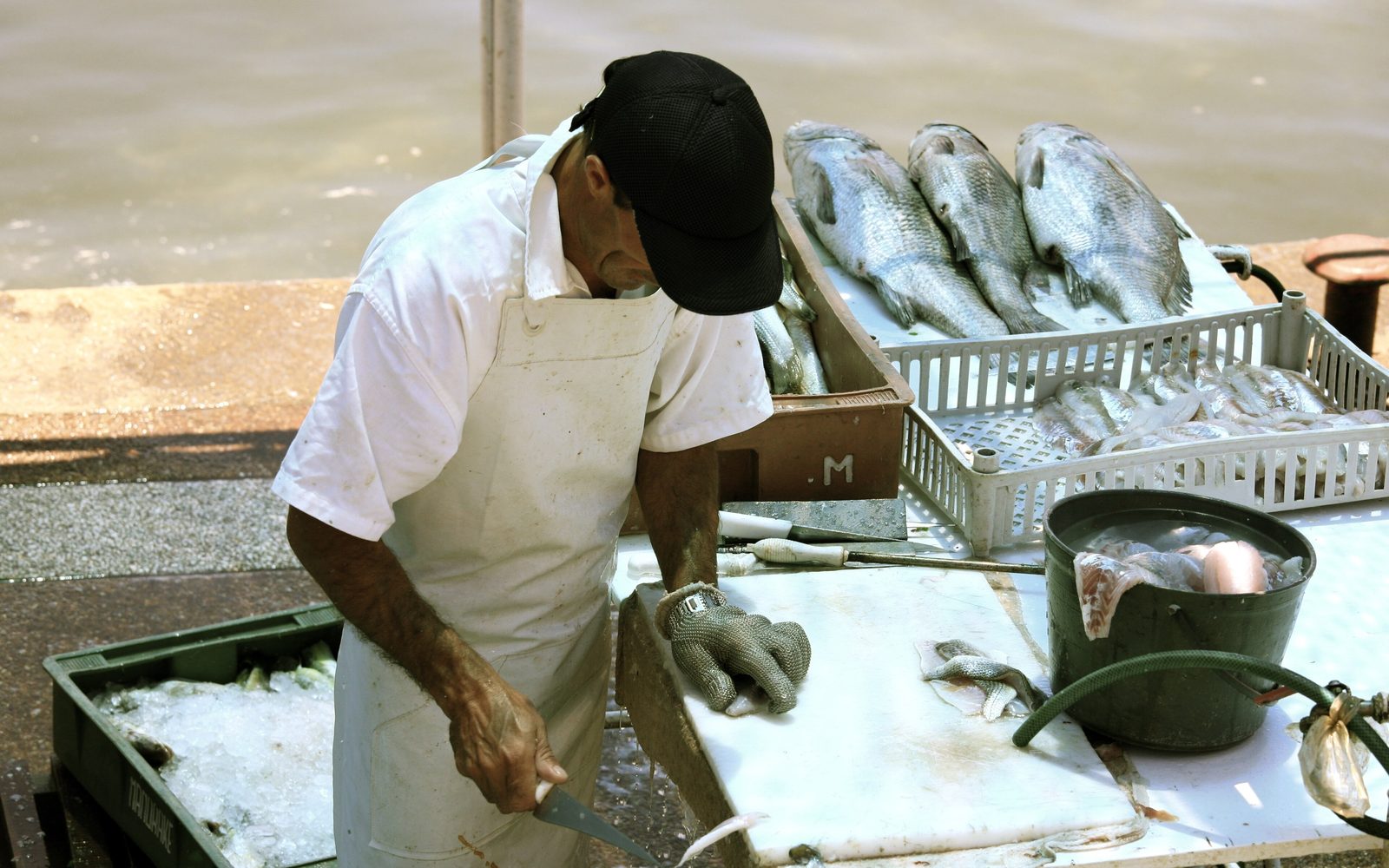
What filleting is
Filleting produces two boneless, or nearly boneless, pieces of meat, one from each side (New York DEC). Oklahoma DWC calls it cutting the meat out without the bones, and Texas Parks & Wildlife says a sharp knife designed for filleting is a must. Not every fish gets filleted: see how to clean a fish for pan dressing and field dressing.
What you need
- A sharp fillet knife with a thin, flexible blade, and a fillet glove on your free hand to prevent serious cuts (Iowa DNR). Oklahoma DWC says the knife must be really sharp to work properly.
- A plastic cutting board or fish cleaning table, a container for the fillets and a knife sharpener (Florida FWC).
- Wash off any slime on your hands and knife handle so they do not slip (Oklahoma DWC).
- Keep fish on ice until you clean them (New York DEC).
The fillet, step by step
Agency step lists agree on the core sequence. Variations are noted.
- Lay the fish on its side on a flat surface. Oklahoma DWC and New York DEC both start with the fish on its side, and Florida FWC grasps the fish’s mouth with one hand.
- Make the first cut. Cut behind the gill cover, or behind the pectoral fin, down to but not through the backbone (Iowa DNR, Texas Parks & Wildlife, New York DEC, Oklahoma DWC). Florida FWC slices down about half an inch, keeping the rear of the blade up, until you feel the spine. Outdoor Alabama cuts from the top of the fish to the belly and into the flesh to the backbone.
- Cut toward the tail along the backbone. Turn the blade toward the tail, flat along but not through the backbone, with a sawing motion. Iowa DNR holds the blade against and nearly parallel to the backbone and saws through the ribs to the base of the tail. Florida FWC says you will feel resistance at the rib cage and that it is better to cut too shallow than too deep. Stop just before you separate the fillet from the body (New York DEC), or about half an inch from the tail fin (Missouri). Texas Parks & Wildlife says the knife can be pushed through the fish near the vent and continued along the bone to, but not through, the tail.
- Skin the fillet. Leave a half to one inch of skin intact at the tail (Outdoor Alabama), then flip the fillet skin side down. Oklahoma DWC puts the blade about half an inch from the tail between the skin and the meat, at an angle, gripping firmly, and cuts against but not through the skin with a little pressure and a sawing motion. Missouri pulls firmly on the tail section as it saws between skin and flesh. For skin on, Texas Parks & Wildlife says to cut through the skin where it attaches at the tail. Florida FWC says to cut very close to the skin for the maximum meat, or to cut only the upper white meat and leave the red meat attached for a less fishy taste.
- Remove the ribs. The fillet still has the ribcage, so cut around it (New York DEC). Iowa DNR places the blade just under the top of the ribs and slices them out. Missouri slices out the rib bones from top to bottom. Iowa DNR notes that some anglers fillet the meat around the ribs rather than cutting through them. For a skin-on fillet, Texas Parks & Wildlife says you can cut through the rib bones where they attach to the spine instead of cutting around the cage.
- Repeat on the other side. Flip the fish and repeat from step 2.
- Trim and rinse. Cut away any strong-tasting dark layer along the lateral line on white bass, largemouth bass and catfish (Missouri, South Carolina DNR). Slice off patches of shiny gray connective tissue (Missouri). Rinse the fillets in cold, clean water and pat dry with a clean cloth or paper towel (Oklahoma DWC, New York DEC).
Skin on or off
Skinless fillets are the usual result for crappie, bass, walleye and carp (Missouri). Texas Parks & Wildlife calls the result two skinless, boneless fillets ready for your recipe, and also shows how to keep the skin on.
New York DEC says it is illegal to fillet, pan dress, skin or cut certain species in any way that prevents their total length from being determined while still on the water, and that other species may be filleted if the skin is left on for identification. Alabama says fish may not be filleted on public water unless the fish is being consumed immediately. Rules differ by state and water, so check your state fish and wildlife agency.
Fish that need a different cut
- Pike and pickerel. New York DEC says they have a lot of bones and need special techniques not shown in its basic method.
- Freshwater drum. Arkansas Game & Fish says to ice the fish as soon as possible and fillet them just as you would bass or crappie. There are no intermuscular bones and the meat is firm, and with a little trimming of the dark red meat just under the skin drum can be prepared in many ways.
- Catfish. They are skinned first; see how to clean a catfish.
Frequently asked questions
How do you fillet a fish for beginners?
Lay the fish on its side, cut behind the gill cover down to but not through the backbone, turn the knife toward the tail and cut along the backbone, then separate the fillet from the skin and ribs. Repeat on the other side.
Should I cut through the ribs when filleting?
Both are used. Iowa DNR saws through the ribs along the backbone and then slices the ribs out of the fillet, and notes that some anglers fillet the meat around the ribs instead. Texas Parks & Wildlife says a skin-on fillet can be cut through the rib bones where they attach to the spine.
Do I need to skin the fillets?
No. Missouri says most anglers fillet and skin crappie, bass, walleye and carp, but skin-on fillets are also made. Some states require skin to stay on for identification while you are on the water.
Can you fillet pike the same way?
New York DEC says pike and pickerel have a lot of bones and need special filleting techniques not shown in its basic method.
Sources
- Learn-to-fish guide: cleaning and cooking your catch (PDF), New York State DEC
- Fish filleting guide (PDF), Iowa DNR
- Cleaning and prepping fish, Missouri Department of Conservation
- How to fillet a fish (Xplor), Missouri Department of Conservation
- Fishing Lines magazine, Florida Fish and Wildlife Conservation Commission
- Filleting a fish (State Parks Getaways), Texas Parks & Wildlife Department
- Drumming up spring fishing excitement, Arkansas Game & Fish Commission
- Basic fishing tips (PDF), Outdoor Alabama, Alabama Department of Conservation and Natural Resources
- Chapter 6: Fish cleaning and cooking, Oklahoma Department of Wildlife Conservation