

Choose a cleaning method
New York DEC names two common ways, filleting and pan dressing, and a third, field dressing, which cleans the fish and keeps it fresh until you get home.
- Pan dressing removes the scales, fins, head and guts and leaves the meat, skin, backbone and ribs, and almost no meat is lost (New York DEC). Outdoor Alabama says most bones stay with the edible portion.
- Filleting cuts the edible part away from the inedible part, and no bones are left (Outdoor Alabama). See how to fillet a fish.
- Field dressing removes the gills and guts in the field (New York DEC).
Which to use depends on the fish. Small fish such as bream (sunfish) are usually dressed (Outdoor Alabama), and larger fish such as largemouth bass, catfish, striped bass and walleye are usually filleted (Oklahoma DWC). Missouri says most anglers fillet and skin crappie, bass, walleye and carp. Catfish and bullheads must be skinned instead of scaled (South Carolina DNR); see how to clean a catfish.
What you need
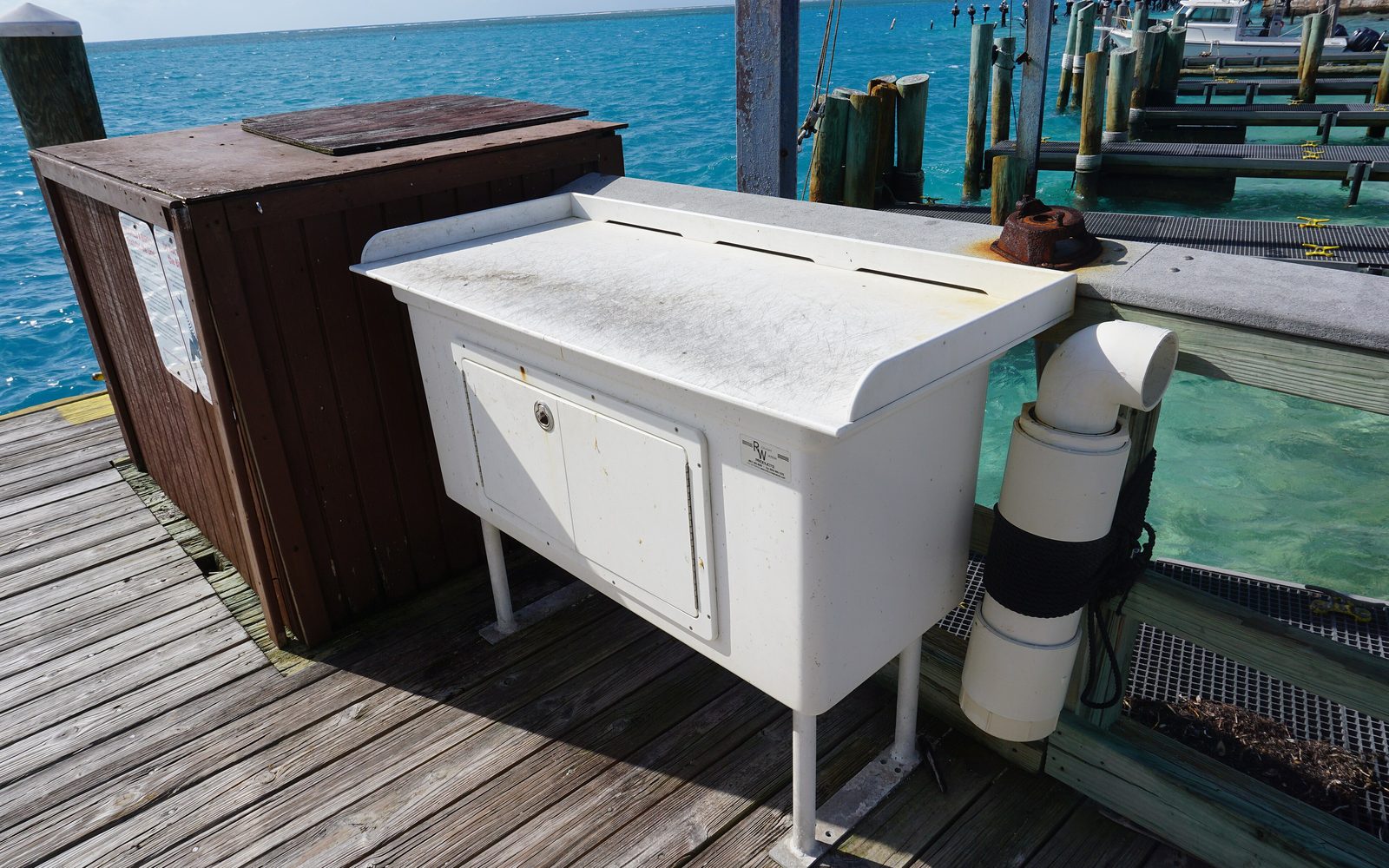
Missouri’s list: a sharp knife, preferably a fillet knife; a scaler, dull knife or spoon; a glove to protect your hand and help grip the fish; and newspaper, which makes cleanup easy. Iowa DNR adds pliers to remove the fins, and Outdoor Alabama says a thin, flexible fillet knife makes cleaning easier. Many fishing accesses and parks have fish cleaning stations with water for rinsing, and you can also clean on a dock, paddle, cooler lid or flat rock (Missouri).
Keep the fish fresh first
- On a stringer, attach the fish through the lower jaw, not the gills, because fish die more rapidly if the stringer goes through the gills (New York DEC).
- If you cannot keep the catch alive, preserve it on ice until you can clean it (New York DEC). Outdoor Alabama says fish are best kept fresh on ice, and Texas Parks & Wildlife says the same if they cannot be kept alive before filleting.
- For an extended period, such as overnight, remove the entrails and gills to reduce spoilage (Texas Parks & Wildlife).
How to pan-dress a fish
These steps follow New York DEC.
- Scale the fish. Using a scale scraper, a butter knife or the back of a fillet knife, scrape from tail toward head on both sides. Iowa DNR holds the blade perpendicular to the fish.
- Cut along the fins. With a fillet knife, cut 1/4 to 1/2 inch deep along each side of the dorsal and anal fins so they can be removed later.
- Cut behind the vent. Hold the fish upside down with its back resting on the table. Cut immediately behind the vent (anus), then slip the knife forward just under the skin until you reach the pectoral fin.
- Cut behind the pectoral fins. Lay the fish flat and make a deep cut on both sides of the body behind the pectoral fin, without cutting the backbone.
- Pull the head. Pull the head upward to break the backbone. The head tears loose and the attached guts, pectoral fins and pelvic fins come with it.
- Remove the fins and tail. Pull the dorsal and anal fins away and forward from the body, using pliers if needed. Cut off the tail.
- Rinse. Rinse with cold, clean water.
Other agencies cut in a different order:
- Iowa DNR: scrape the scales, cut down behind the head and the pectoral fins, remove the organs, cut off the tail if desired, rinse with cold water and pat dry.
- Missouri: cut along the sides of the fins on the back and behind the stomach and pull the fins out, cut off the head, slit the belly and scrape out the entrails.
- South Carolina DNR: cut directly behind the gill cover and remove the head with the innards. Slice along each side of the dorsal fin and remove it, cut along both sides of the anal fin and pull it toward the tail, then cut the belly from where the head was to the tail and pull out the remaining innards.
How to field dress a fish
New York DEC’s field-dressing steps:
- Cut from the vent to the gill arches, keeping the blade shallow so you do not cut the stomach or intestines.
- Cut the bridge that attaches the gills.
- Remove the gills and internal organs.
- Some fish have a long, red kidney along the backbone inside the body cavity. Scrape it out with the knife blade or your thumbnail.
- Rinse the body cavity with water and pack the fish in a cooler with ice.
Trim the dark meat
Missouri says some fish, such as white bass and largemouth bass, have a strong-tasting dark layer of flesh along the lateral line that should be cut away before cooking or storage. South Carolina DNR says the same about the dark red meat along the lateral line of catfish.
New York DEC notes that chemicals such as PCBs, dioxin and mirex can accumulate in the fatty tissue of a fish and recommends removing the skin and trimming fatty areas: the belly flap, the lateral lines on each side and the fat along the back and under the skin. Check the advisories for the water you fish with your state agency.
South Carolina DNR and New York DEC both say to always cut away from yourself. Oklahoma DWC says to wash any slime off your hands and the knife handle so they do not slip, and suggests metal or rubber mesh gloves while you are learning.
Storage
New York DEC says cleaned fish keep in the refrigerator for up to two days after being caught and cleaned, and the closer the temperature is to freezing (32 degrees F) the better. It says to freeze fish that will not be cooked within two days, and that you can freeze fish in water, which works well for fillets.
New York requires walleye, largemouth and smallmouth bass, brook trout, lake trout and Atlantic salmon to be kept whole or field dressed only, with the head attached, while on the water. Other species may be filleted if the skin stays on for identification. In Alabama, fish may not be filleted while the angler is on public water unless the fish is being consumed immediately. Check your state fish and wildlife agency before you clean on the water.
Frequently asked questions
How do you clean a fish step by step?
Scale it from tail to head, cut along the dorsal and anal fins, cut behind the vent, then behind the pectoral fin, pull the head up to break the backbone so the head and guts come away, remove the fins and tail and rinse in cold water (New York DEC pan-dress method).
Should you scale or fillet a fish?
Small fish such as sunfish are usually pan-dressed (scaled and gutted) and larger fish such as bass, walleye and catfish are usually filleted (Outdoor Alabama, Oklahoma DWC). Catfish and bullheads must be skinned instead of scaled (South Carolina DNR).
How long can cleaned fish stay in the fridge?
New York DEC says up to two days after being caught and cleaned, and the closer to 32 degrees F the better. Freeze fish that will not be cooked within two days.
Can I fillet my fish on the water?
It depends on the state and the species. New York requires walleye, largemouth and smallmouth bass, brook trout, lake trout and Atlantic salmon to be kept whole or field dressed with the head attached while on the water, and Alabama does not allow filleting on public water unless the fish is eaten immediately.
Sources
- Learn-to-fish guide: cleaning and cooking your catch (PDF), New York State DEC
- Fish cleaning guide (PDF), Iowa DNR
- Cleaning and prepping fish, Missouri Department of Conservation
- Filleting a fish (State Parks Getaways), Texas Parks & Wildlife Department
- South Carolina fishing guide (PDF), South Carolina DNR
- Basic fishing tips (PDF), Outdoor Alabama, Alabama Department of Conservation and Natural Resources
- Chapter 6: Fish cleaning and cooking, Oklahoma Department of Wildlife Conservation